Thursday, 19 May 2016

What She Left by T.R Richmond


DISCLAIMER: This blog is not for profit. All images and footage used are property of their respective companies unless stated otherwise. I do not claim ownership of this material.
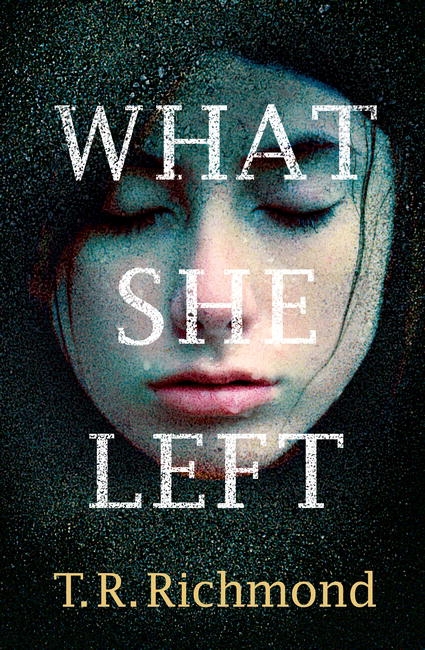

This cleverly constructed and addictive mystery has almost everything you could want from a thriller. It will keep readers hooked until its final pages, mostly out of a desperation to find out what happened to the protagonist, Alice Salmon, on the night she mysteriously drowned, once and for all.

Many of the book’s most prominent characters are not the most likable people and this can make certain segments a bit of a struggle. However, this is more than made up for in the originality of the structure. Alice’s texts, emails and other media related to her life are slowly pieced together by a Professor (who is obsessed with Alice to a slightly creepy extent), allowing the reader to be fully immersed within the world of Alice Salmon. This idea also works well in the fact that it really allows the reader to get to know Alice, as small things such as music playlists really flesh out her character, making her seem like a real person. This then in turn makes the reader even more desperate to know what actually happened on the night of her death.

The only slight disappointment (emphasis on slight) is the final reveal of what happened to her. Although it could have ended with a worse scenario, thinking about it logically about 10 pages before it is revealed may lead to the reader working it out. In spite of this, getting to that point is as fun as any TV mystery. In addition to this, the novel’s conclusion is not only satisfying but is actually very moving.

On the whole this is an addictive and thrilling mystery that offers readers everything they could want from the Mystery genre.    
   

Wednesday, 4 May 2016

The Martian by Andy Weir

DISCLAIMER: This blog is not for profit. All images and footage used are property of their respective companies unless stated otherwise. I do not claim ownership of this material.


Much like its 2015 film adaptation, the strength of this book truly lies in its protagonist. The situation that Astronaut Mark Watney finds himself in when he is left stranded on Mars is serious enough to create swathes of dramatic tension and Weir does this admirably. But the story is also lifted by the constant humour that Mark adds to his situation. This then makes him an incredibly likable main character to follow and causes readers to continuously root for him, in addition to lightening up the book as a whole.

This is a story that could have gone incredibly dark, but it is instead often peppered with laughs, as opposed to the doom and gloom that could have arisen. Much of the story is also focused on problem solving, as opposed to primarily focusing on Mark’s struggles. The latter angle would have allowed Weir to create high emotion and dramatic tension, but would have become tiring by the end of the book, so I am glad he did not go for that perspective.      

Structurally, the book is a patchwork of styles. Wier skilfully combines Mark’s Logs (written in the first person), with a more traditional third person narrative and Mark Watney’s conversations with NASA. The changes between styles can seem jarring at first, but they come to suit each part of the story perfectly. The first person logs work brilliantly to showcase the main character’s personality and strengthen his relationship with the reader. Meanwhile, the third person sections are more descriptive, allowing Weir to really ramp up and the tension and play up to the emotional side of the story.

In spite of this, the book is grounded in the Science of the situation, as would be expected, giving the book a sense of realism throughout.  

Overall, this book is an addictive and thrilling read, with a great narrative structure and an incredibly likable protagonist.

Wednesday, 27 April 2016

The Versions of Us by Laura Barnett

DISCLAIMER: This blog is not for profit. All images and footage used are property of their respective companies unless stated otherwise. I do not claim ownership of this material.


This type of story, with its setup of having several versions of the same story caused by minor tweaks in the opening, has been seen many, many, many times before (most notably in the Gwyneth Paltrow fronted 1998 film ‘Sliding Doors’). But here it is used to far more interesting effect than most readers would probably predict. Instead of having a clichéd ridden ‘good’ and ‘bad’ version, the complex lives of these characters intertwine in the three separate versions, with both positive and negative consequences arising from the small changes to their first meeting. The various paths that (often star crossed) lovers Jim and Eva tread are also connected by various unifying plot points, coincidences and events, which add to the realism of the story as a whole. Connecting the various narratives in this way also adds a sense of realism, as readers will genuinely feel as if the stories are only different because of those all important changes in all three openings. The book also has a very nice writing style, with sharp clear prose fitting the story perfectly. Another near-perfect element is the way in which the author explores the way in which the changes in the narratives affect the book’s central couple as individuals, in addition to their lives as a couple, as this then allows them to develop as characters.

At the same time, the three versions can become very similar at times. As a result of this, along with the book’s 60 year timespan, the book can become quite confusing to read, as there are certain, rather frustrating, points where you have to continually remind yourself of which story you are in. This sense of confusion is also not helped by the authors’ tendency to drop readers straight into a chapter, slowly revealing the latest development in the characters’ lives. This can be effective at times, as the way in which the reader slowly comes to realise events can lead to them having a bigger impact, especially during the book’s more dramatic moments. But when it is used in chapter after chapter after chapter, it can get rather tedious to read. In addition to this, the book’s timespan can also be a problem. There are certain points, particularly in Version One, that could even be described as Soap-Opera esque, as the author desperately looks for events to pad the story out so that all the versions reach their conclusion at the same time.

However, overall the book does well with its concept and is enjoyable to read, in spite of some structural issues that can make it confusing at best and downright frustrating at worst.